If you drive around High Point long enough, a windshield chip is almost a rite of passage. Interstate 74 throws gravel, neighborhood construction kicks up debris, and a summer cloudburst can hide a pothole you didn’t see until it was too late. When a crack spreads past the point of a safe repair, you face a decision that sounds simple but carries real trade-offs: OEM or aftermarket glass. The choice influences how the glass fits, how your safety systems behave, what it costs, and how easy it will be to maintain or calibrate down the road.
I’ve spent years around shops that handle auto glass repair in High Point, watching how different vehicles and situations respond to different glass options. I’ve seen a same day auto glass High Point job go perfectly with aftermarket on a 10-year-old sedan, and I’ve seen an aftermarket pane cause weeks of sensor calibration headaches on a brand-new SUV. If you want to avoid those traps, it helps to understand how these parts differ, and to match the glass to your vehicle, your budget, and your timeline.
What OEM really means, and what it doesn’t
OEM stands for original equipment manufacturer, which sounds like it must be the exact piece of glass your car had when it left the factory. Sometimes it is. More often, it means the glass is produced by the same supplier that made the factory glass, to the automaker’s specification, and it carries the carmaker’s branding and part number. On a BMW or Toyota, that might be Saint-Gobain, AGC, or Pilkington. On a domestic truck, it might be Fuyao or PGW. Many of these brands also produce aftermarket versions of the same glass without the automaker logo.
The important bit isn’t the logo, it’s the spec. OEM parts follow the automaker’s tolerances for thickness, curvature, edge prep, frit band width, acoustic lamination, bracket placement, and coatings. When your car has driver-assistance systems, those tolerances matter because a camera bracket that sits half a millimeter off, or glass curvature outside the tighter end of the range, can change how the camera reads lane lines. OEM parts reduce those variables.
That said, OEM isn’t magic. I’ve seen mispackaged OEM windshields, and I’ve opened crates where a lower mounting tab came bonded a few degrees out of true. Reputable shops catch those defects during pre-fit checks. A good installer is at least as important as the logo on the glass.
Aftermarket glass, the range from solid to sketchy
Aftermarket glass spans a spectrum. On one end you’ll find parts from the same global manufacturers that supply automakers, built on the same lines, with slightly broader tolerances and no carmaker branding. On the other end, you’ll find budget pieces where you can see waves in the reflection at certain angles, or a frit band whose curve doesn’t quite align with the pinch weld channel. The price difference can be significant, especially when acoustic interlayers or specialized coatings are involved.
For a 2012 Camry or a base-trim 2015 F-150 without cameras, a high-quality aftermarket windshield fitted by an experienced tech performs well. For a 2022 RAV4 with lane-keeping assist and a heated camera array, I’d lean OEM or at least OEM-equivalent aftermarket matched to the camera calibration software your shop uses. The more sensors glued to the glass, the higher the risk of nuisance alerts, failed calibrations, or slight optical distortion that becomes a big problem for the camera even if your eyes never notice it.
Safety standards are the floor, not the target
Both OEM and aftermarket windshields sold in the U.S. must meet Federal Motor Vehicle Safety Standard 205 for glazing, and installations must support the vehicle’s crash safety design under FMVSS 212/208. Those standards cover impact resistance and how the glass behaves with seatbelts and airbags during a crash. They do not test how a lane camera sees through the glass or whether the acoustic dampening is as quiet as stock. That’s where the part spec and the installer’s process matter.
Shops doing auto glass replacement in High Point who work on late-model vehicles also follow OEM repair procedures for adhesive cure times and camera calibrations. Factory cure times aren’t negotiable. I’ve seen folks push a vehicle out the door an hour after bonding because the driver needed to get back to work. The urethane might have skinned over, but it hasn’t achieved the structural bond strength the airbag system assumes. Any reputable windshield replacement High Point provider should set a safe drive-away time that reflects adhesive choice, temperature, and humidity.
The calibration wildcard with ADAS
Advanced driver-assistance systems changed the windshield conversation. If your vehicle has a forward-facing camera or radar components mounted near the glass, replacing the windshield often requires calibration. You’ll see it called static, dynamic, or both. Static uses targets on stands inside the shop. Dynamic uses a specific drive routine on marked roads at set speeds. Some vehicles require both steps, and there are brand-specific quirks.
I’ve watched calibrations that complete in 20 minutes, and others that drag through multiple attempts, usually when the replacement glass bracket sits slightly off or the shop’s floor isn’t level enough for a static rig. On a 2019 Honda CR-V, for example, the targets need to be placed to the millimeter, and the shop floor must be within a tight slope tolerance. If you use mobile auto glass in High Point and your vehicle needs static calibration, a good provider brings a portable rig and levels it correctly, or they handle the install mobile and finish calibration at a dedicated space. Ask how they handle cars that require both static and dynamic steps. If the answer is vague, keep looking.
When repair beats replacement
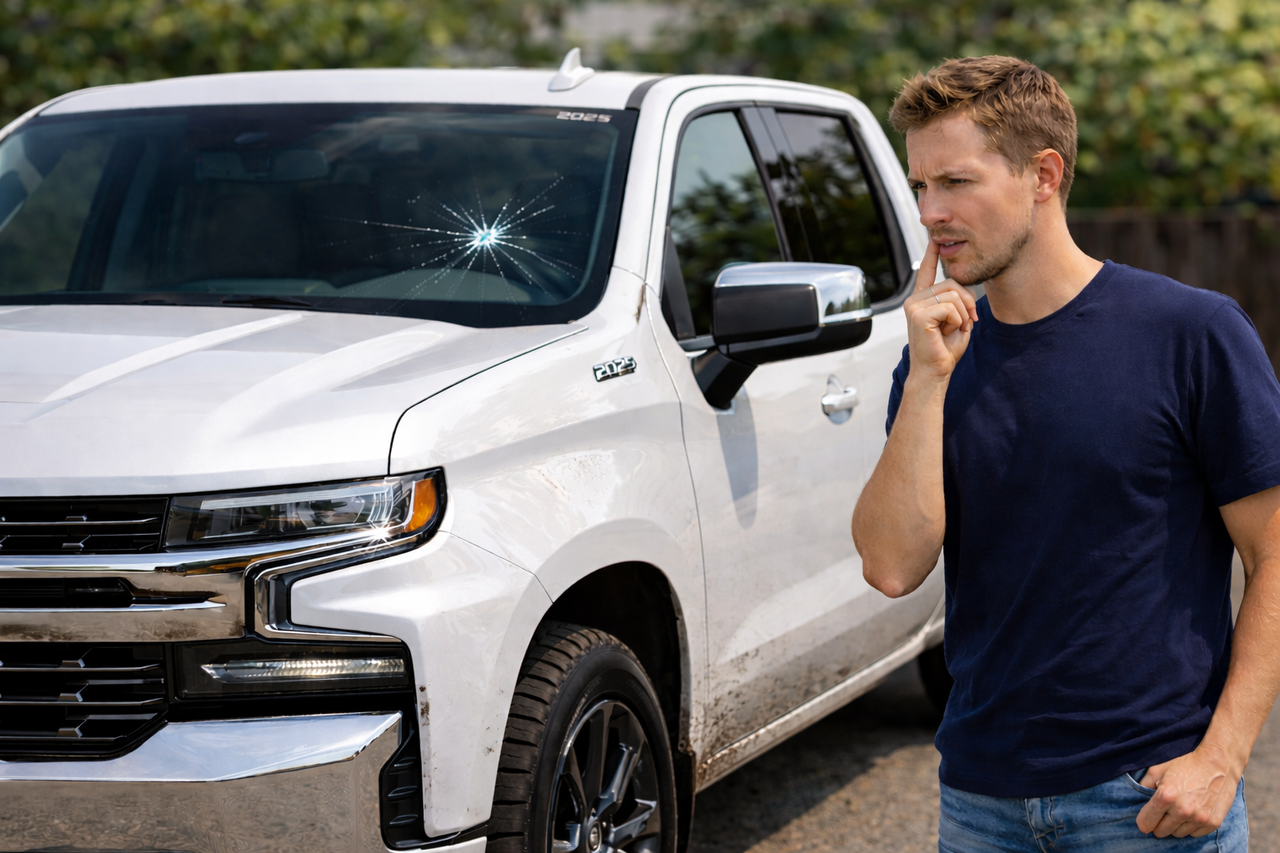
Not every crack calls for a new windshield. A bull’s-eye or star break the size of a quarter, or a crack under 6 inches that sits outside the driver’s line of sight, can often be saved. Resin injection, done right, restores strength and stops propagation. It may not make the blemish disappear, but it will keep the glass safe. For windshield repair in High Point, the weather window matters. Resin hates moisture. A humid Carolina summer afternoon is fine if the tech uses a moisture meter and warms the area. A cold wet morning in January complicates things. The best shops build a weather plan into their schedule so you don’t get a bad cure that fails a week later.
Once a crack reaches the edge or crosses into the heated wiper park area, repair is less reliable. If you have ADAS sensors in the affected zone, repair may interfere with camera clarity. At that point, replacement becomes the safer bet.
Cost, insurance, and how High Point shops usually handle claims
For a typical sedan without sensors, aftermarket windshields might cost 250 to 450 installed, while OEM runs 400 to 800 in the Piedmont Triad, depending on availability. Add acoustic glass, HUD projection, rain sensors, heated elements, or camera brackets and the gap widens. On some late-model SUVs, OEM can pass 1,200. That’s when insurance enters the picture.
North Carolina comprehensive coverage typically includes glass. Many policies waive the deductible for repair, and some waive it for replacement, though that’s less common. If your deductible is 500, an aftermarket replacement out of pocket might make sense on an older vehicle. On a newer vehicle with ADAS, insurers often approve OEM when the automaker requires it for calibration or when the aftermarket part is not available. Shops that do auto glass repair in High Point and work with carriers every day can handle the paperwork and direct-bill the claim, which saves time. Ask your provider if they have preferred status with your insurer. Preferred doesn’t mean you have to use them, but it tends to streamline approvals.
Fit, finish, and the quiet cabin test
One practical way to judge glass quality is to drive at 55 mph on the Greensboro loop and listen. A wind whistle at the A-pillars usually points to installation, not the glass. A broader whoosh from around the mirror area on vehicles that originally had acoustic glass might signal that the replacement lacks the same interlayer spec. Another check is polarizing sunglasses. On some lower-end aftermarket panes, you’ll see rainbow patterns at certain angles. It doesn’t mean the glass is unsafe, but it can be distracting. Finally, check the ceramic frit band at the top and sides. If it doesn’t cover the adhesive completely, the sun will degrade the urethane and you’ll get a bond line that looks chalky in a year.
For luxury cars with heads-up displays, OEM or true OEM-equivalent glass makes a difference. HUD images rely on a specific laminate that prevents ghosting. I’ve seen aftermarket pieces that claim HUD compatibility still produce a faint double image at night. If you can’t tolerate that, specify OEM.
Mobile service versus shop install
Mobile auto glass in High Point is a lifesaver when you can’t spare a half-day at a shop. A good mobile tech can deliver the same quality as a shop install, provided two conditions are met: the environment supports the adhesive and calibration needs, and the technician has the right tools on the truck. Summer heat and pop-up thunderstorms make planning tricky. You want shade, a relatively dust-free spot, and a surface where the technician can lay out the glass without contamination. Adhesive cure times lengthen when it gets cold, and some urethanes shouldn’t be applied below specific temperatures even with primers. A reputable same day auto glass High Point provider will reschedule rather than compromise a bond.
If your vehicle needs static calibration, I prefer doing the install at a facility with a level floor and a calibration bay. Dynamic-only vehicles or those that don’t require calibration do fine in a driveway. When a shop offers both options, they’ll steer you based on your car’s equipment and the day’s conditions.
When timing can’t wait: emergency decisions
Emergency auto glass in High Point comes up more than you’d think, especially after hail or when a break-in leaves a side window shattered. Driving with plastic over the opening invites water damage and electrical problems, and a missing quarter glass can become a safety hazard. In a pinch, availability trumps branding. I’ve installed aftermarket side glass on a Saturday evening for a family heading out Sunday morning, with the plan to switch to OEM later if noise or fit wasn’t acceptable. Side and rear glass don’t affect ADAS the way a windshield does, so the stakes are lower. For windshields, if you need a safe seal and can’t get OEM in time, a high-quality aftermarket piece installed correctly is better than waiting days with compromised visibility or a loose crack that spreads.
High Point specifics that shape the choice
The Triad has a mix of roads: urban arterials, fresh concrete on the beltways, and plenty of tree-lined streets. Tree sap and pollen in spring coat glass and can hide chips until the sun hits them at the wrong angle. Construction zones on I-74 and Business 85 throw grit. Seasonal humidity swings make small chips turn into long cracks after a hot afternoon thunderstorm. Because of that environment, I advise addressing chips within 48 hours when possible. Many shops that handle car window repair in High Point offer drive-up repair windows that take 30 minutes. It’s cheap insurance against replacement.
Parts availability also fluctuates. Some OEM windshields for popular SUVs are plentiful. Others sit on backorder for weeks. Good shops keep a live feed on distribution warehouses from Charlotte to Raleigh and can tell you whether OEM is realistic on your timeline. If you’re shopping, ask how many of your specific windshields they’ve installed this year, and whether they stock the moldings and clips. A surprising number of wind noise complaints come from reused moldings that should have been replaced.
What a quality install looks like from start to finish
A thorough auto glass replacement in High Point follows a predictable rhythm. The tech confirms the exact options on your vehicle using the VIN: rain sensor, heated area, acoustic, HUD, camera bracket type. They protect the dash and paint with fender covers, then cut the old urethane without gouging the pinch weld. After removing the glass, they trim the old urethane to a thin, even layer, clean the bonding surface, and treat any bare metal with primer. They dry-fit the new windshield to check alignment and bracket placement, apply primers according to the urethane manufacturer’s timing, then lay a uniform bead with correct height and shape. The set is deliberate and controlled, often with vacuum cups and guide stops. Reassembly includes new clips and moldings when required. If calibration is needed, it happens after the adhesive reaches the minimum safe strength, not overlapping the cure. Finally, you get a written drive-away time and care instructions, like avoiding car washes for a couple of days and cracking a window if temperatures swing.
When OEM is worth the money, and when it isn’t
There are moments when OEM is the smart play:
- You have a late-model vehicle with forward-facing cameras, HUD, or heated elements integrated into the glass, and you plan to keep the car. You’re sensitive to cabin noise and your vehicle originally had acoustic glass that you want to preserve. Your insurer will cover OEM and parts are available within your timeframe.
Aftermarket often makes sense when:
- Your car is older or doesn’t have ADAS, and the aftermarket brand is reputable. You need to control cost due to a high deductible, and you have a shop that stands behind fit and finish. OEM is on backorder and you’d face a long wait with a compromised windshield.
One more judgment call: if a shop suggests aftermarket but pairs it with a documented ADAS calibration and a Windshield replacement High Point road test, and they offer to swap to OEM at no labor charge if calibration fails or optical issues arise, that shows confidence. I’ve seen shops set that policy and rarely need the swap.
Side and rear glass, a quicker path
Car window replacement in High Point for door glass and quarter glass usually doesn’t involve the same debates. Side glass is tempered, not laminated. It shatters and must be replaced. Aftermarket side glass that matches the tint and shape generally performs like OEM. The key is the regulator and weatherstripping. If the glass rattles or squeaks, the installation missed clip alignment, or the run channels are worn. Rear windows with integrated defrosters benefit from OEM when possible because grid performance varies. I’ve seen aftermarket back glass with slightly narrower bus bars that take longer to clear frost. If you park outside and rely on defrost at 6 a.m., ask the shop about that detail.
The local network effect: why the shop matters
Even the best glass can’t overcome a rushed or sloppy install. When you’re vetting high point auto glass providers, focus on three things: technician experience with your specific make and camera system, calibration capability in-house or through a trusted partner, and parts sourcing. Shops that do volume with the same distributors typically get better fill rates and faster warranty exchanges. Ask for a straight answer on whether they’ll reuse moldings or replace them. Ask how they handle unexpected rust on the pinch weld. A rust bubble hidden under the old glass can ruin adhesion if it isn’t addressed.
Reputation counts. In a midsize city like High Point, the same names come up because they stand behind their work. A shop that tells you to wait an extra two hours for the urethane to cure when a cold front rolled in is protecting you. A shop that won’t install certain low-tier aftermarket brands is doing you a favor you may never notice.
Practical scenarios from the field
A delivery driver brought in a 2018 Transit with a long crack and a camera for lane departure mounted high on the glass. Aftermarket would have saved him 300, but he drove 250 miles a day, mostly highway, and he’d had false lane warnings in heavy rain even before the crack. We went OEM, calibrated static and dynamic, and the warnings stopped. The cost was real, but the downtime and stress saved were worth it.
A college student with a 2011 Civic needed a windshield before finals. No sensors, just a basic mirror. We used a reputable aftermarket brand, replaced the molding, and she was out for under 300. That car is the definition of a good aftermarket candidate.
A 2023 SUV with HUD came in after a gravel truck spilled small stones on Business 85. The owner’s insurer initially approved aftermarket, but the first calibration produced a faint ghosting in the HUD at night. We documented it, the insurer approved OEM on the second attempt, and the ghosting disappeared. It added two days, and the owner was happy he pushed for a fix instead of living with it.
How to talk to a shop so you get what you need
Clarity helps. When you schedule auto glass replacement in High Point, have your VIN ready. Tell the shop if you have lane assist, automatic high beams, HUD, or rain-sensing wipers. Mention remote start or defroster lines embedded at the base. Ask whether your vehicle requires calibration, whether they handle it in-house, and what the drive-away time will be. If you prefer OEM, say so. If you’re open to aftermarket, ask for brands they trust and what differences you might notice. Finally, set expectations for weather and timing if you choose mobile service. A short delay for conditions often pays off in a better seal and less noise.
The bottom line for High Point drivers
The right answer isn’t the same for everyone. If your vehicle relies on the windshield as a sensor housing, OEM or OEM-equivalent isn’t just a luxury, it’s a way to preserve the safety systems you paid for. If your car is a few years past its warranty and free of cameras, a quality aftermarket pane installed by a careful technician will likely serve you just as well and save you money. Either way, prioritize the installer’s process, calibration competence, and parts quality over the fastest appointment or the lowest bid.
Local conditions matter too. Between summer storms, pollen, and ongoing roadwork, chips turn into cracks quickly here. The earlier you handle damage, the more choices you keep. Whether you need windshield repair high point service for a small star break, or a full windshield replacement high point with calibration and an acoustic match, a solid shop will walk you through options and stand by the result. And if you ever need same day auto glass high point help on a tight schedule, choose the provider that values a safe bond and a correct calibration over speed. Your windshield anchors airbags, frames your field of view, and in many cars now, guides the computers that keep you in your lane. Treat it like the structural part it is, and it will do its job every mile down Wendover, I-74, and the quiet streets back home.